Examination no. 04 / the prerequisite
What Is Under the Guard Decides Everything
A guard is a filter fitted to a channel. If the channel is wrong, a filter cannot correct it, and now the channel is out of sight.
This is the shortest useful idea on this desk, so it goes first. A gutter guard adds no capacity, no fall and no rigidity. It cannot make a small trough bigger, it cannot make a flat run drain, and it cannot pull a sagging section back up to the fascia. It filters. That is the whole function.
Which means that if the water is already going somewhere it should not, a guard will not stop it. It will simply put a screen between you and the evidence.
What you will be told
Guards will sort out the overflowing you have been getting at that corner.What happens on the roof
Sometimes true, and worth saying so. If the corner overflows because the trough is packed solid with rotting leaf, keeping the leaf out fixes it.
Often not true. If the corner overflows in the twenty minutes after a cell passes over, and it does it even when the gutter was cleaned last week, the trough is not blocked. It is full, which is a different word. Something upstream is delivering more water than the outlet can take away, and a screen does not change that arithmetic by one drop.
The test is free: clean the gutter, then wait for the next hard rain and watch the same corner. If it still goes over, do not buy a guard yet.
The four things to settle first
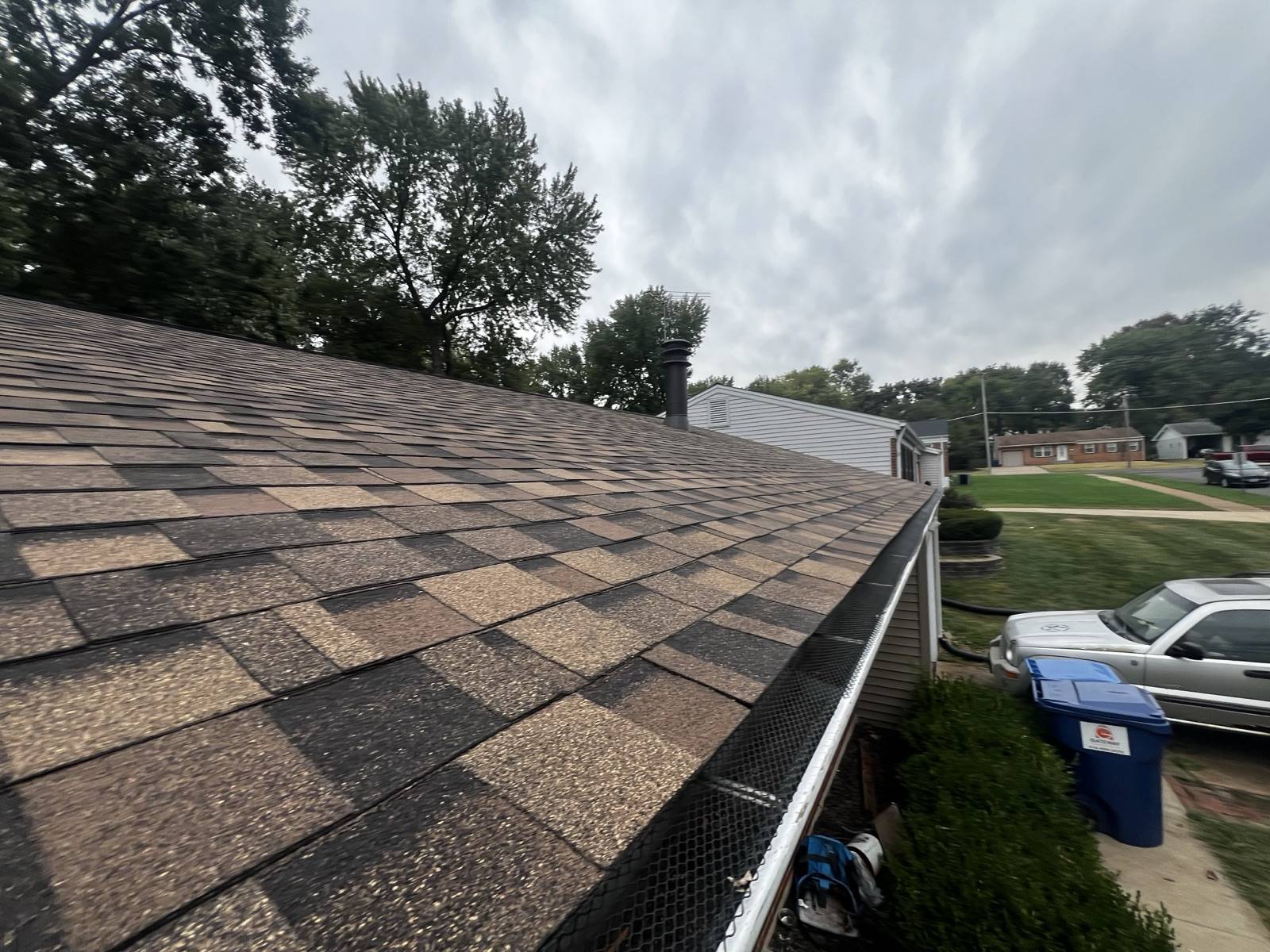
What a guard hides
This is the part that is genuinely underrated. An open gutter is a diagnostic instrument. You can see into it from a ladder, from an upstairs window, sometimes from the garden. You can see silt building at the low end, a joint weeping, a hanger pulling, a shingle edge crumbling above it.
Once a screen goes across the top, that inspection stops happening. Problems that used to be obvious in year one become obvious in year four, when the fascia is soft or the soffit has a stain. That is not an argument against guards. It is an argument for making sure the trough is right on the day the guard goes on, because that is the last easy look anyone is going to get.
The sequence that avoids all of this
Roof first if the roof is close. Then the gutter itself: size, fall, hangers, outlets, and any run that needs a second outlet added. Then, and only then, the guard, chosen for the trees that are actually over the house. Reversing that order is how people end up owning an expensive screen over a gutter that was never going to work.
If your roof is the item that is close, read why guards and roof replacement belong in one conversation. If you are not sure whether you need a guard at all, the worth it page is the blunt version.
Before the guard
Describe the overflow, not the product
Where it spills, in what kind of rain, and whether it also spills when the gutter has just been cleaned. Those three answers separate a capacity problem from a fall problem from a blockage, and they can be given over the phone.
Keys Roofing does gutters and downspouts as well as roofs, so the answer is not obliged to be a guard.
Straight to the Keys office. Roofing, gutters and downspouts across greater St. Louis. No siding, no windows, no commercial work.