Examination no. 07 / sequence
Granules and the Age of Your Roof
The reason a good screen guard sometimes disappoints has nothing to do with leaves and everything to do with the surface directly above it.
What an asphalt roof is doing all the time
An asphalt shingle is a mat saturated with asphalt and surfaced with crushed mineral granules. Those granules are not decoration. They are the shingle's sunscreen: they take the ultraviolet load so the asphalt underneath does not dry out and crack.
They also come off. A new roof sheds loose granules heavily in its first season, which are simply the ones that were never firmly bedded. Then the rate settles down for most of the roof's life. Then, as the asphalt hardens and loses its grip, the rate climbs again, and by the last years of a roof's service life it is shedding steadily every time it rains.
All of it goes into the gutter. Every one of those granules is sand sized, angular and heavy, and every one of them arrives at the exact place a gutter guard is fitted.
What you will be told
Get the guards on now and you are covered whatever you do about the roof later.What happens on the roof
This gets the order backwards for two separate reasons, and both cost money.
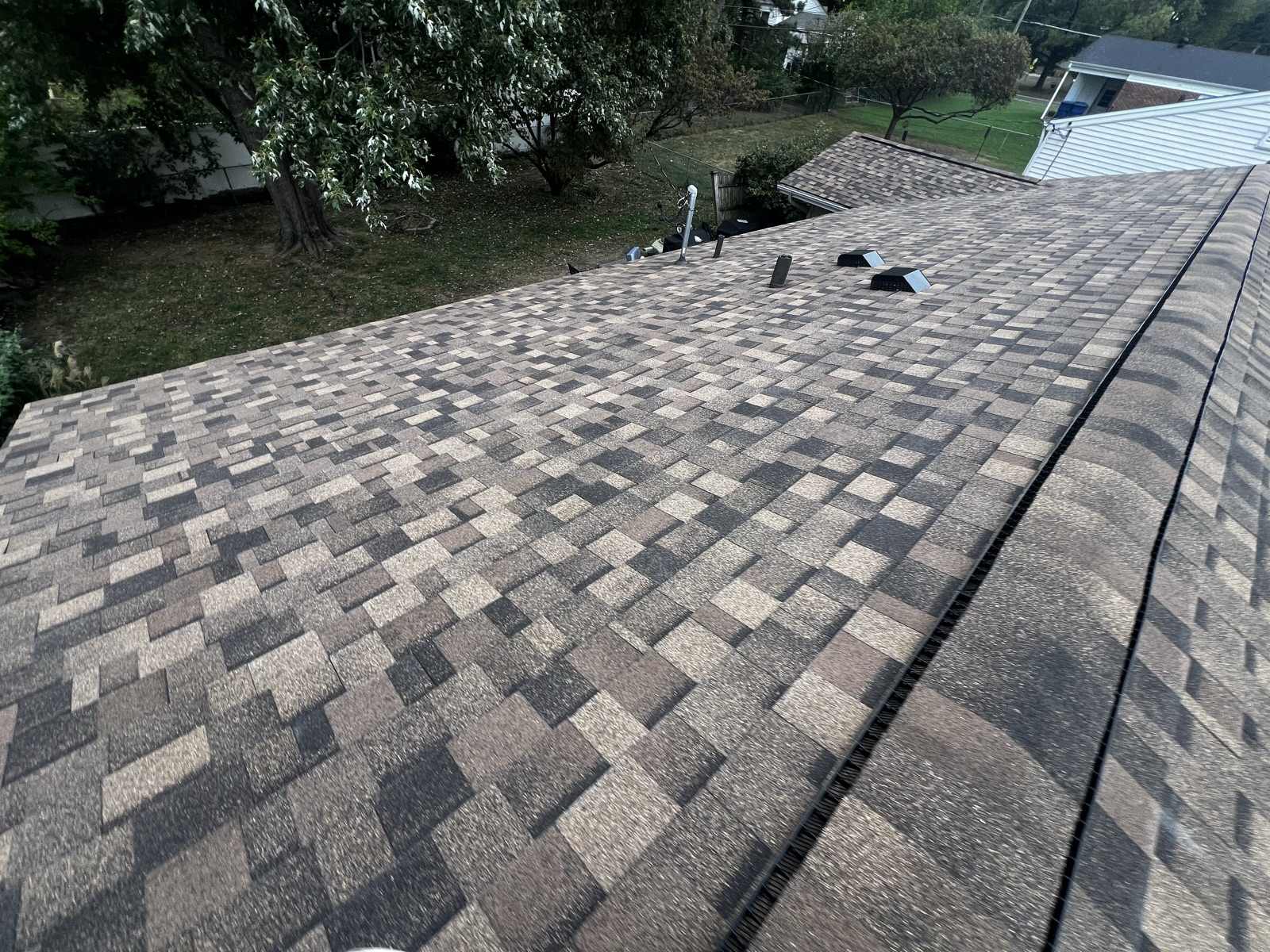
First, a roof approaching replacement is producing the heaviest grit load it will ever produce. Fitting a fine mesh into that is fitting a filter to its worst possible input. It will blind faster than it would on a roof with life left, and the owner will conclude, wrongly, that the product was rubbish.
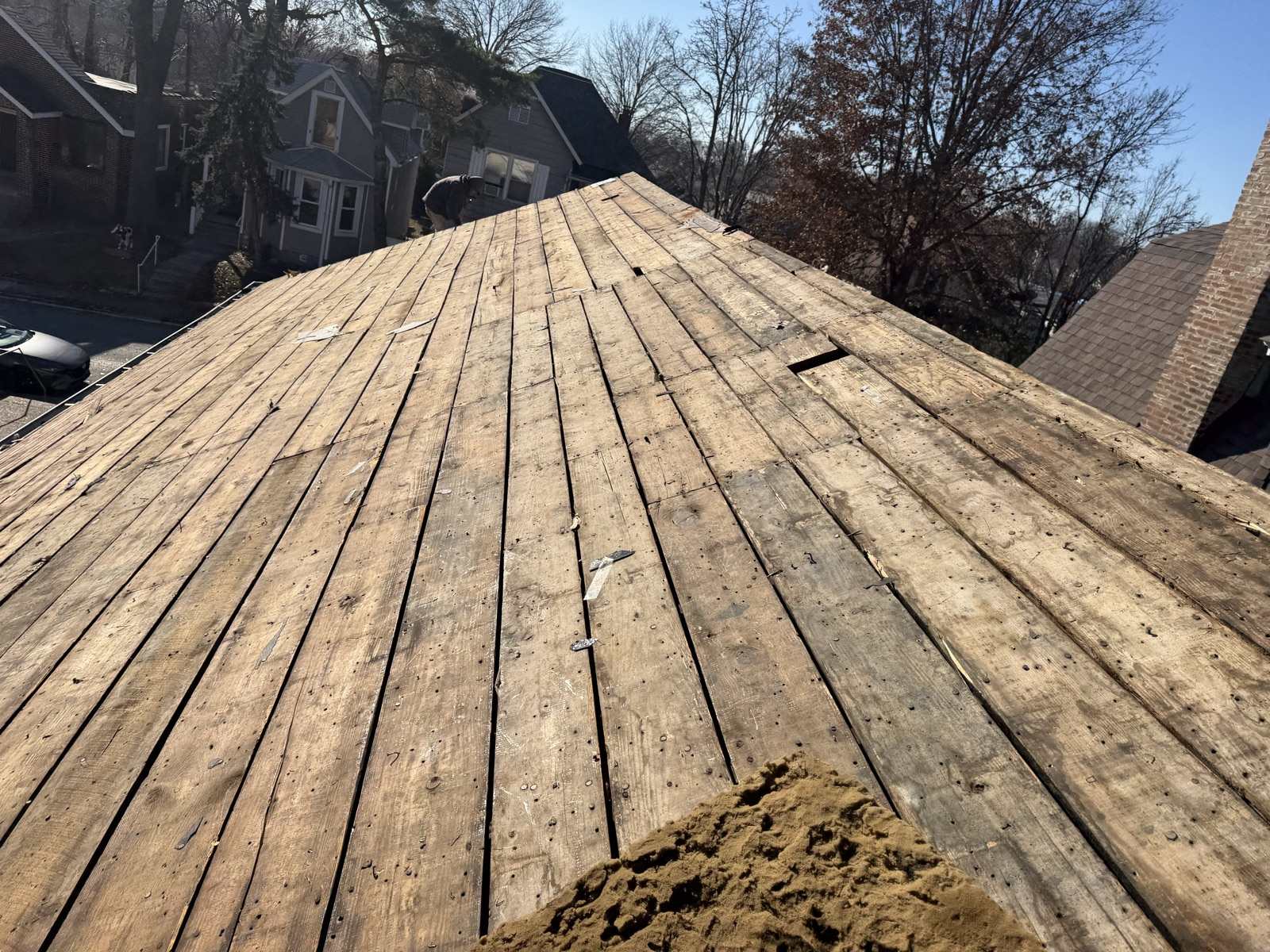
Second, a tear off means everything at the eave gets disturbed. A guard tucked under the shingle course has to come off before the course above it can be stripped, and going back on is another labour line. Paying to fit, remove and refit inside a couple of years is a straightforward waste.
The order that saves money
How to tell where your roof is, from the ground
- Look in the splash zone. At the bottom of a downspout, or on the ground beneath one, granules collect as a small drift of coarse dark sand. A little is normal on any roof. A visible accumulation that rebuilds after every storm is a roof shedding at the far end of its life.
- Look for a change in colour. Patches where the shingle reads darker or shinier than its neighbours are patches where granule cover has thinned enough to show the asphalt underneath.
- Look at the shingle edges. Cupping, curled corners and edges that have lost their straight line mean the mat has dried and is deforming.
- Do not judge by the gutter alone. A gutter full of grit tells you granules are coming off. It does not tell you whether that is a new roof shedding loose surface or an old one giving up, and those two lead to opposite decisions.
Why this desk keeps saying it
Guards and roofs are sold by different companies with different incentives, so nobody in the transaction is naturally responsible for the sequence. Keys does both, which is the only reason this page can be written without it costing somebody a sale. If your roof is close, the honest recommendation is to spend nothing on guards this year.
Once the sequence is settled, the remaining decision is which family of guard suits the trees over your house: the screen guards, or a reverse curve hood, which is the one option that does not blind at all.
Order of operations
Tell us how old the roof above the gutter is
It is the first question worth answering and most people know roughly. A roof near the end of its life changes the guard recommendation completely, and it changes it before anybody needs to visit.
Keys Roofing does both the roof and the gutter, which means the sequence can be got right rather than sold in the wrong order.
Straight to the Keys office. Roofing, gutters and downspouts across greater St. Louis. No siding, no windows, no commercial work.